1. Solar panel
Sunlight becomes low-voltage DC electricity at the panel.
Animated infographic
A balcony solar kit starts with sunlight hitting a panel. The panel makes DC electricity, the microinverter converts it into grid-synchronized AC, and an approved connection offsets power your home is already using.
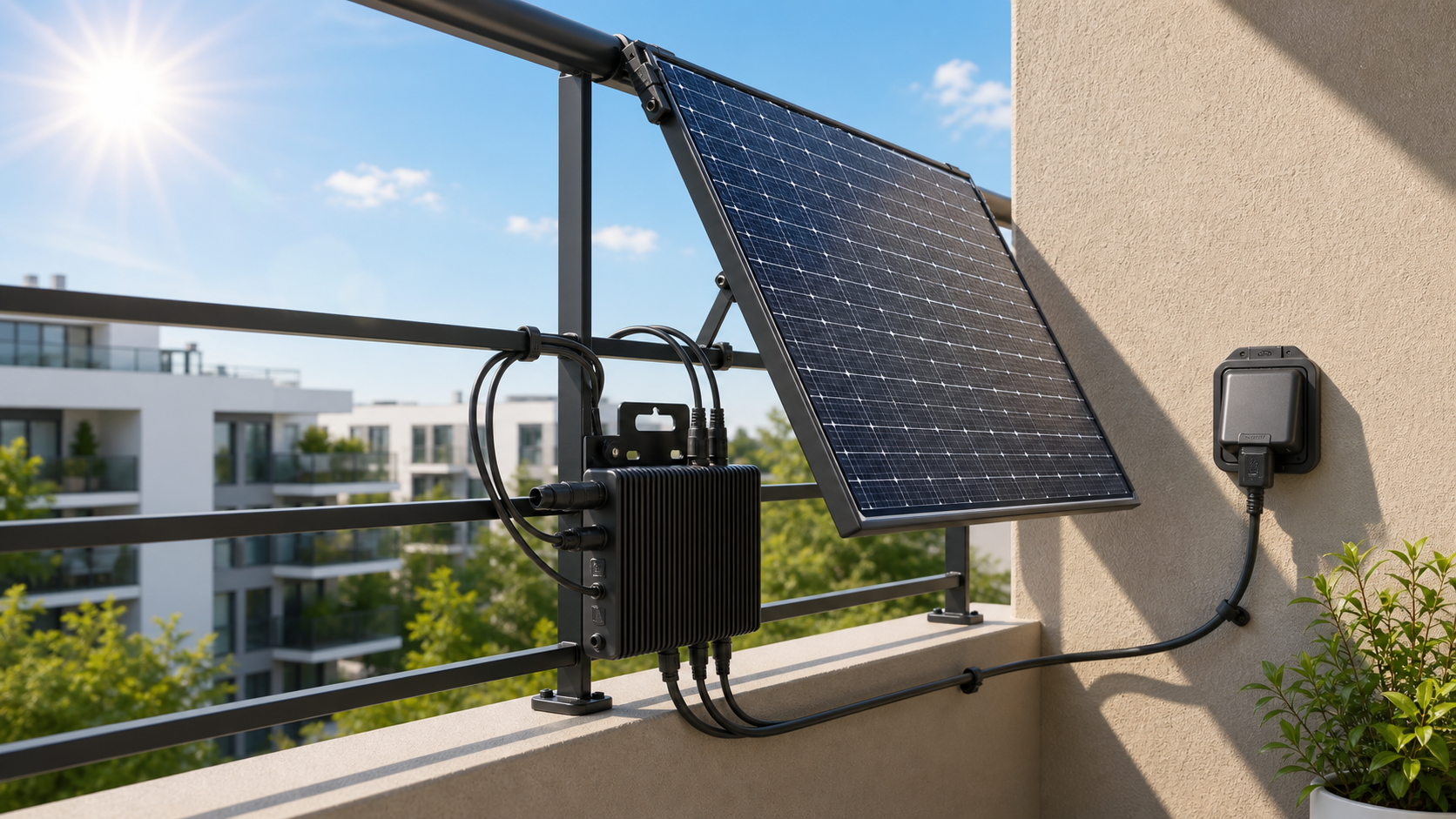
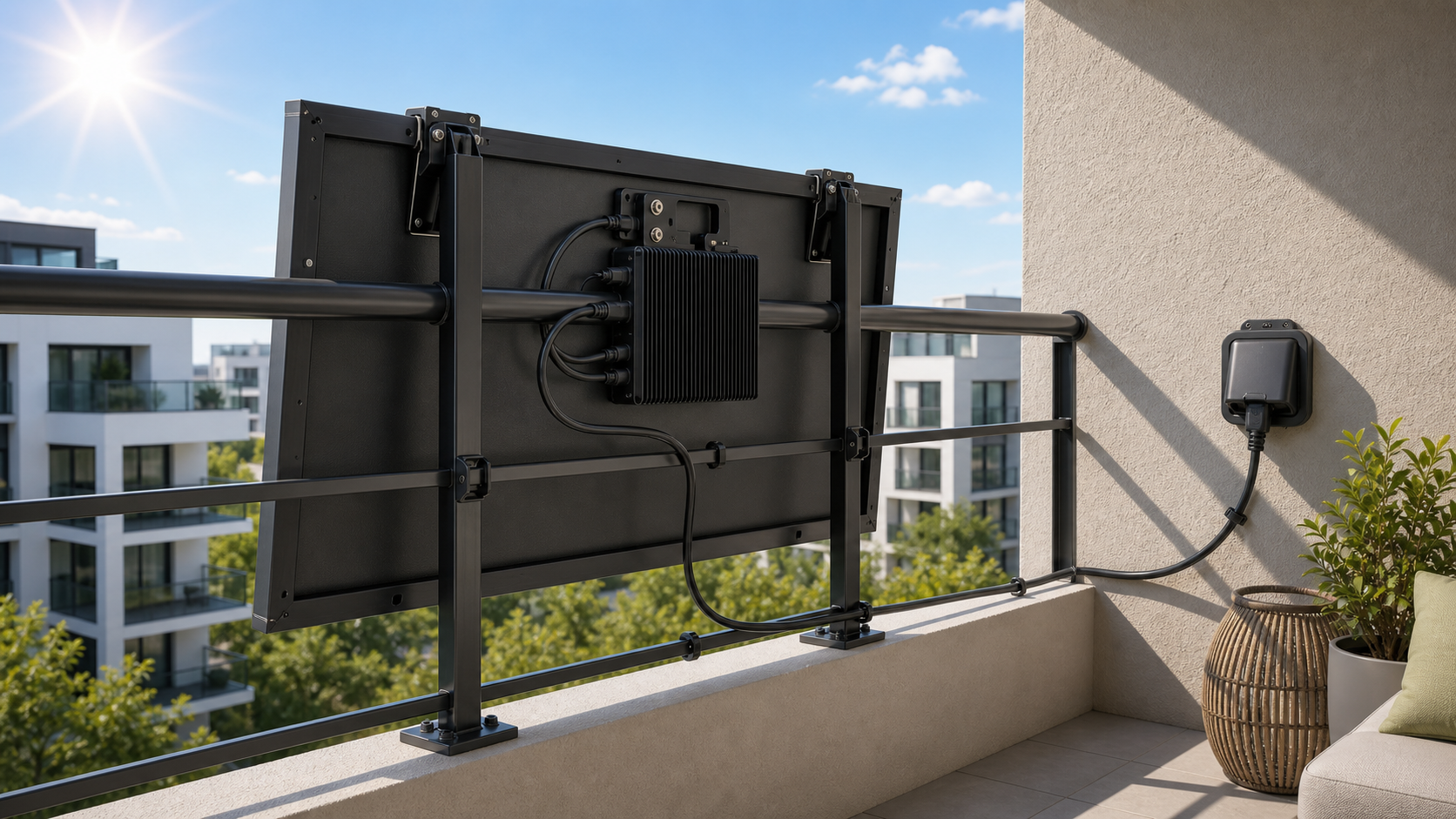
The animation explains the concept, not permission to install. Use listed equipment and follow your state, utility, building, and electrical-code requirements.
Energy path
Sunlight becomes low-voltage DC electricity at the panel.
DC is converted into AC that can synchronize with household power.
Rules may require export limits, utility notice, or a dedicated circuit.
Production offsets power being used by lights, routers, fans, and appliances.
Step-by-step
Solar panels produce direct current. That power needs controlled conversion before it can safely interact with household AC wiring.
A proper inverter synchronizes voltage and frequency, shuts down during outages, and follows the product and utility rules for export behavior.
If your apartment is using power while the panel is producing, the solar energy can reduce what you buy from the grid.
Safety logic
The consumer benefit is obvious: cheaper, smaller, renter-friendly access to solar. The safety requirement is just as real: every approved system needs a defined electrical path, listed components, a secure mount, and a utility-aware shutdown/export strategy.