Origin story
Where balcony solar came from
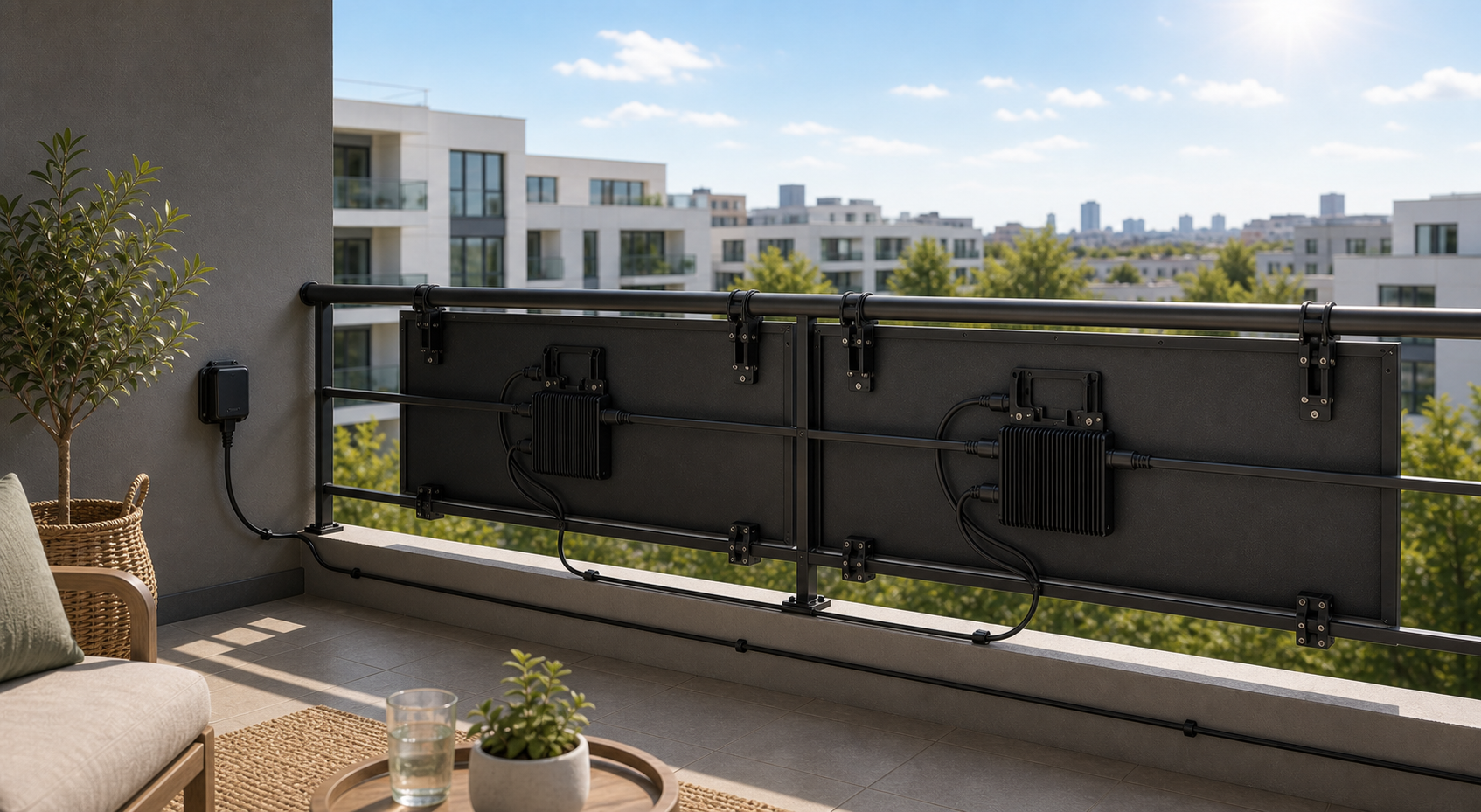
Balcony solar is not a new kind of solar cell. It is a newer product and policy category that
combines mature photovoltaic panels, small inverters, simple mounts, monitoring, and a legal path
for people who do not control a roof. Its modern form grew fastest in Germany, where it became
known as a Balkonkraftwerk or plug-in solar device.
1950s-2000s
Solar gets small enough to modularize
Practical silicon solar cells were demonstrated in the 1950s, then improved through space,
off-grid, and rooftop markets. As panel prices fell and inverter electronics shrank, a one- or
two-panel system became realistic for ordinary homes.
2010s
Europe turns panels into an appliance
Early plug-in PV kits appeared in Europe for renters, apartment owners, patios, garages, and
balcony rails. The idea was simple: produce a small amount of daytime power close to where it is
used, without a full rooftop project.
2016-2019
Germany moves it out of the gray zone
Germany's DGS PVplug working group formed around plug-in solar safety and standards work. Their
campaigns helped push clearer VDE pathways for small plug-in generators, including owner-managed
registration and practical limits for household-scale systems.
2020-2024
Balcony solar becomes mainstream in Germany
Energy-price pressure, lower kit costs, simpler registration, and an 800W inverter limit helped
move balcony solar from hobbyist equipment to hardware sold through mainstream retail channels.
The German model became the reference point for other markets.
2025-today
The U.S. starts building its own rulebook
In the United States, the category is still younger and more fragmented. By August 2026,
several states had signed plug-in solar pathways while other bills were awaiting governors,
one-chamber passage, or 2027 reintroduction. The rulebook is now centering on equipment
listings, export control, utility notice, and renter or condo protections.